
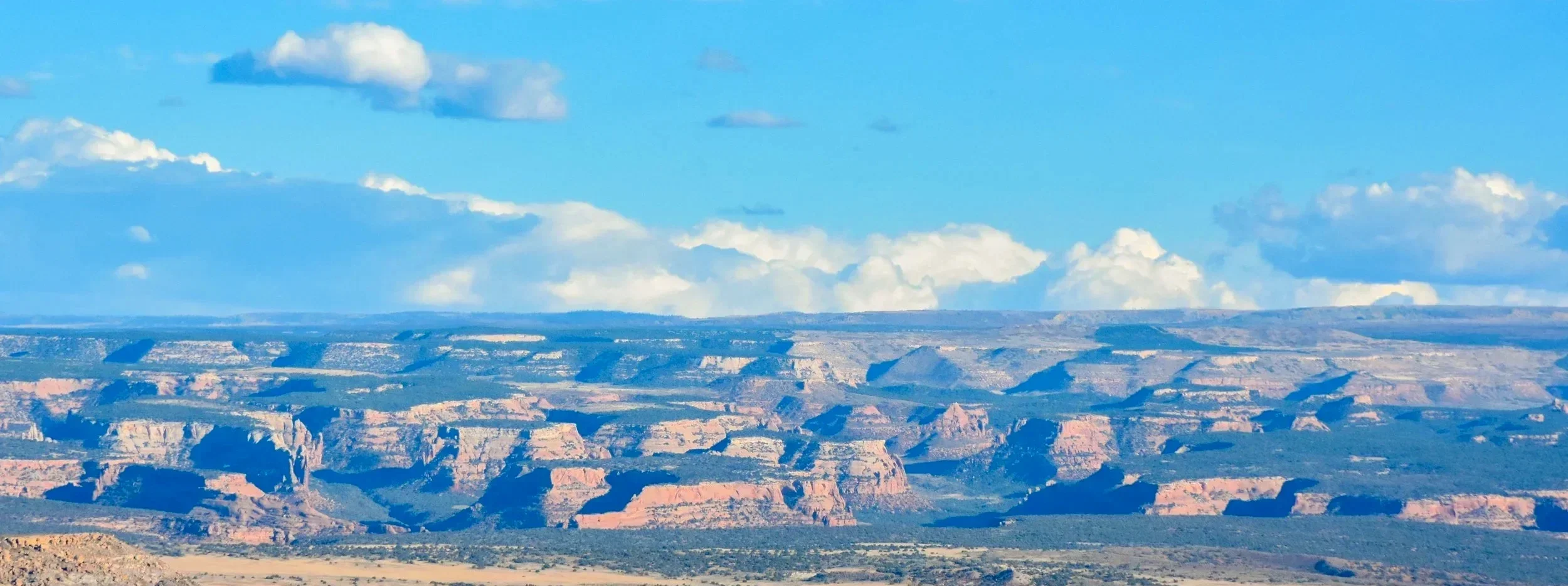
A Desert Stop with History
Long before highways and national park itineraries, this stretch of eastern Utah was a place of passage. People have moved through these canyons for thousands of years, and the nearby rock art of Sego Canyon is one of the clearest reminders that this landscape held meaning long before modern travelers arrived.
Today Thompson Springs is small and quiet, but it still carries the feeling of the Wild West, shaped by movement, survival, rail lines, and long roads through open country.
How It Began
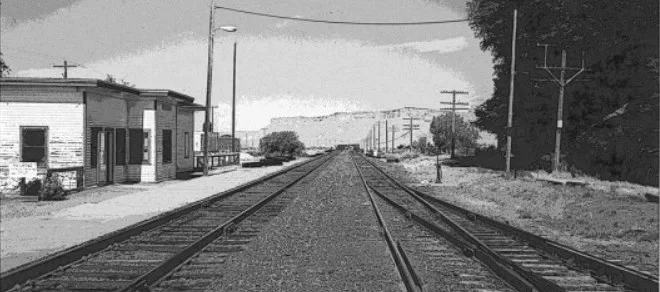
Thompson Springs took shape in the late 1800s as a railroad stop in a remote but important stretch of eastern Utah. What began as a practical watering and service point grew into a small desert town where ranchers, miners, railroad workers, and travelers crossed paths on their way through canyon country.
As coal mining picked up in nearby Sego Canyon, the town became even more active. Freight moved through, workers came and went, and Thompson Springs earned its place as one of those rough edged Western outposts that existed because people needed it to. It was a stopover, a supply point, a meeting place, and for many, the last bit of civilization before heading deeper into the desert.
The Story of Desert Moon
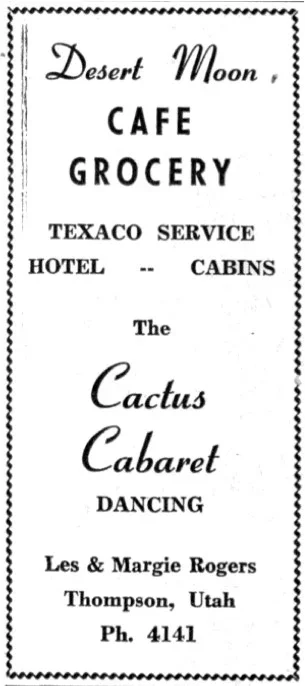
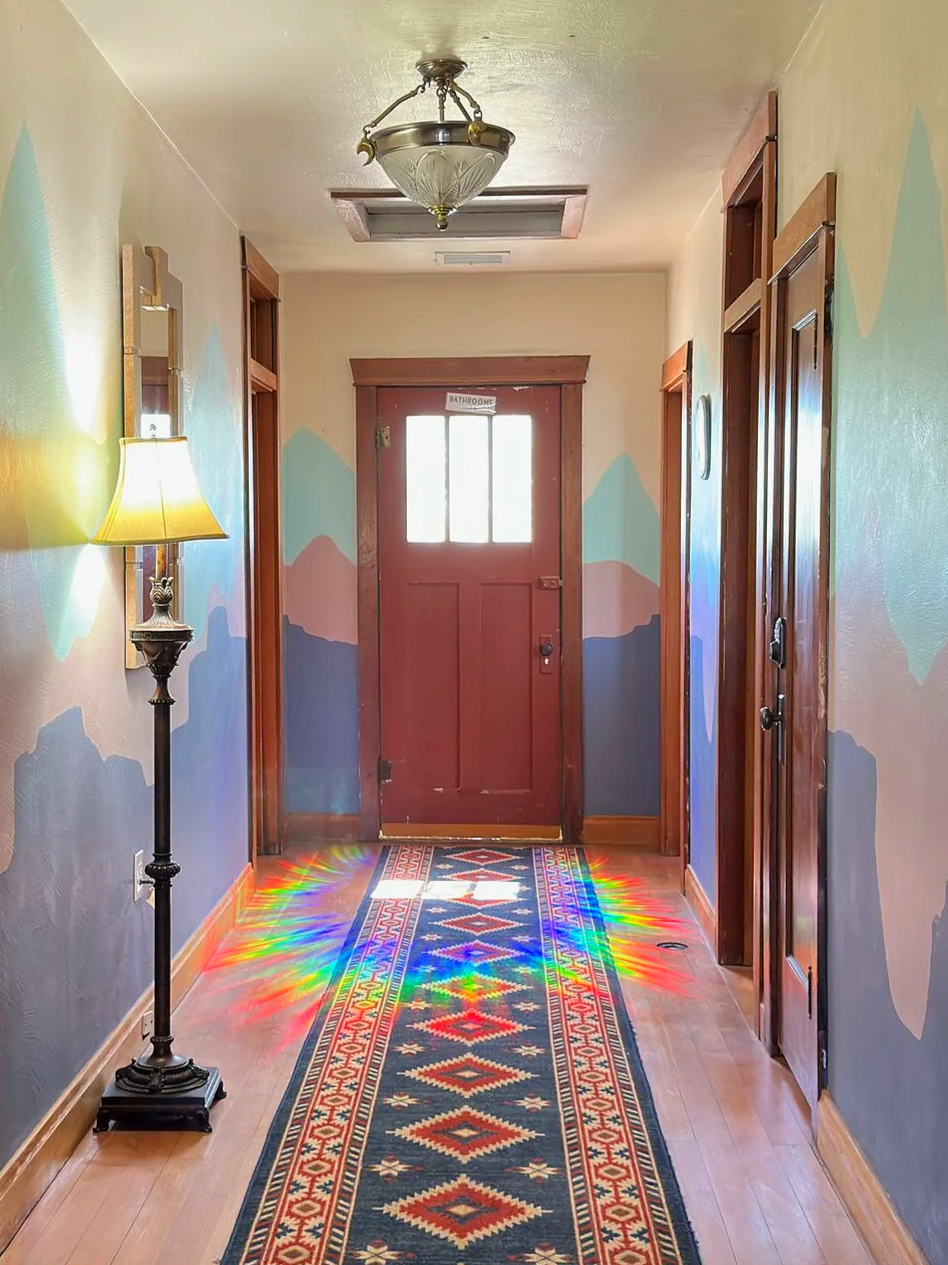
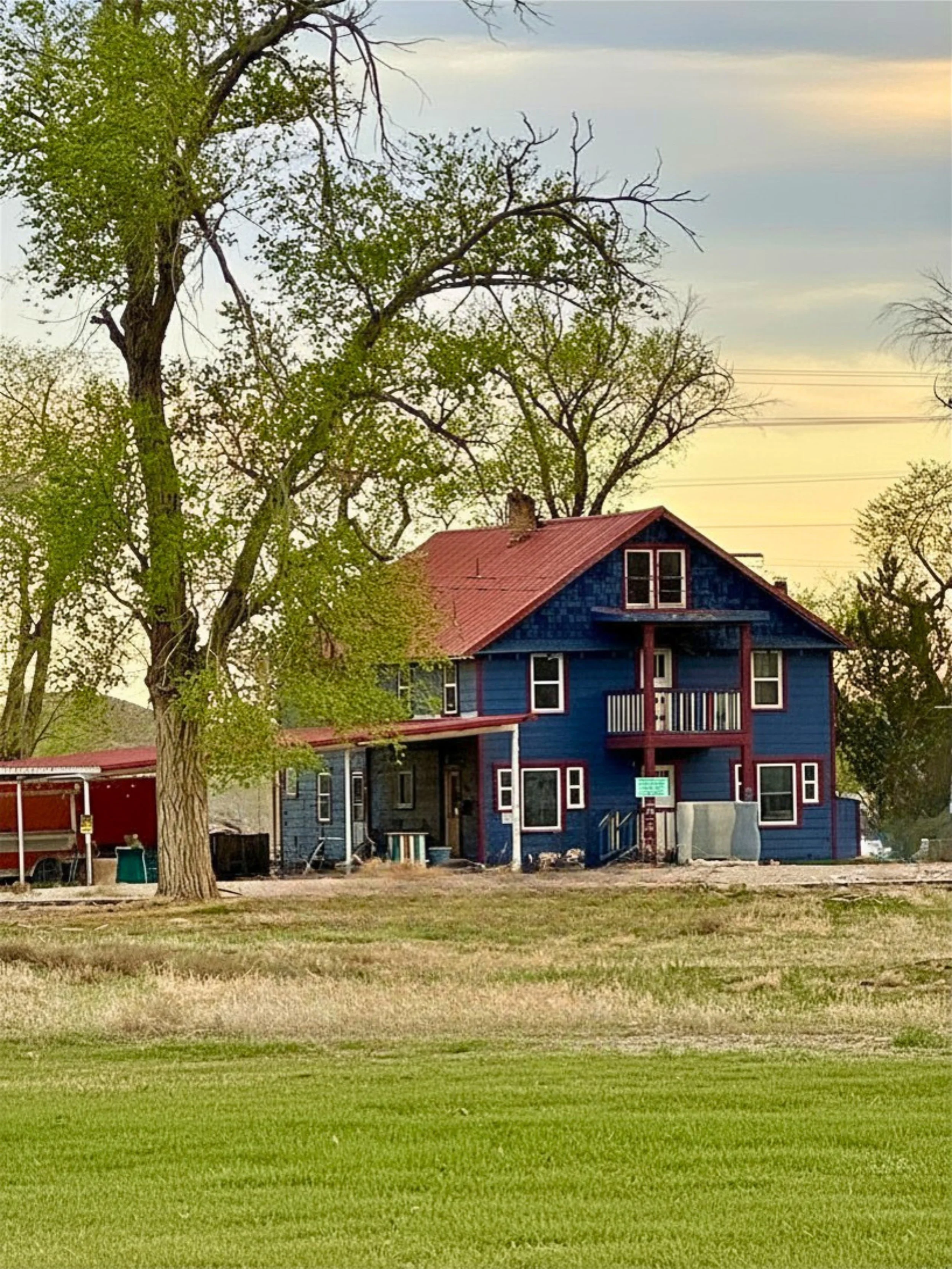
The historic hotel building dates back to 1936, when this part of Utah was still shaped by railroad traffic, mining routes, truck travel, and the culture of the Wild West. Over the decades, the property welcomed all kinds of passers through: travelers, workers, drifters, adventurers, and people just looking for a place to land for the night.
Back then, the property had a different kind of reputation too.
What is now part of Desert Moon was once home to the Cactus Corral, an old time Wild West bar that, by local memory, was also a brothel. It was the kind of place that belonged to a very different era of the American West, a roadside social world of railroad workers, miners, truckers, and dusty nightlife. It is easy to imagine that these walls have seen more than a few unforgettable nights.
That history is part of what shaped Desert Moon into what it is now. This place is not polished or generic, Desert Moon has lived many lives.
The landscape around Thompson Springs has long felt cinematic, and that is not just imagination. Scenes from Thelma & Louise were filmed in Thompson Springs, and the wider Moab region is deeply tied to classic Western film history, including John Wayne-era moviemaking in southeastern Utah.
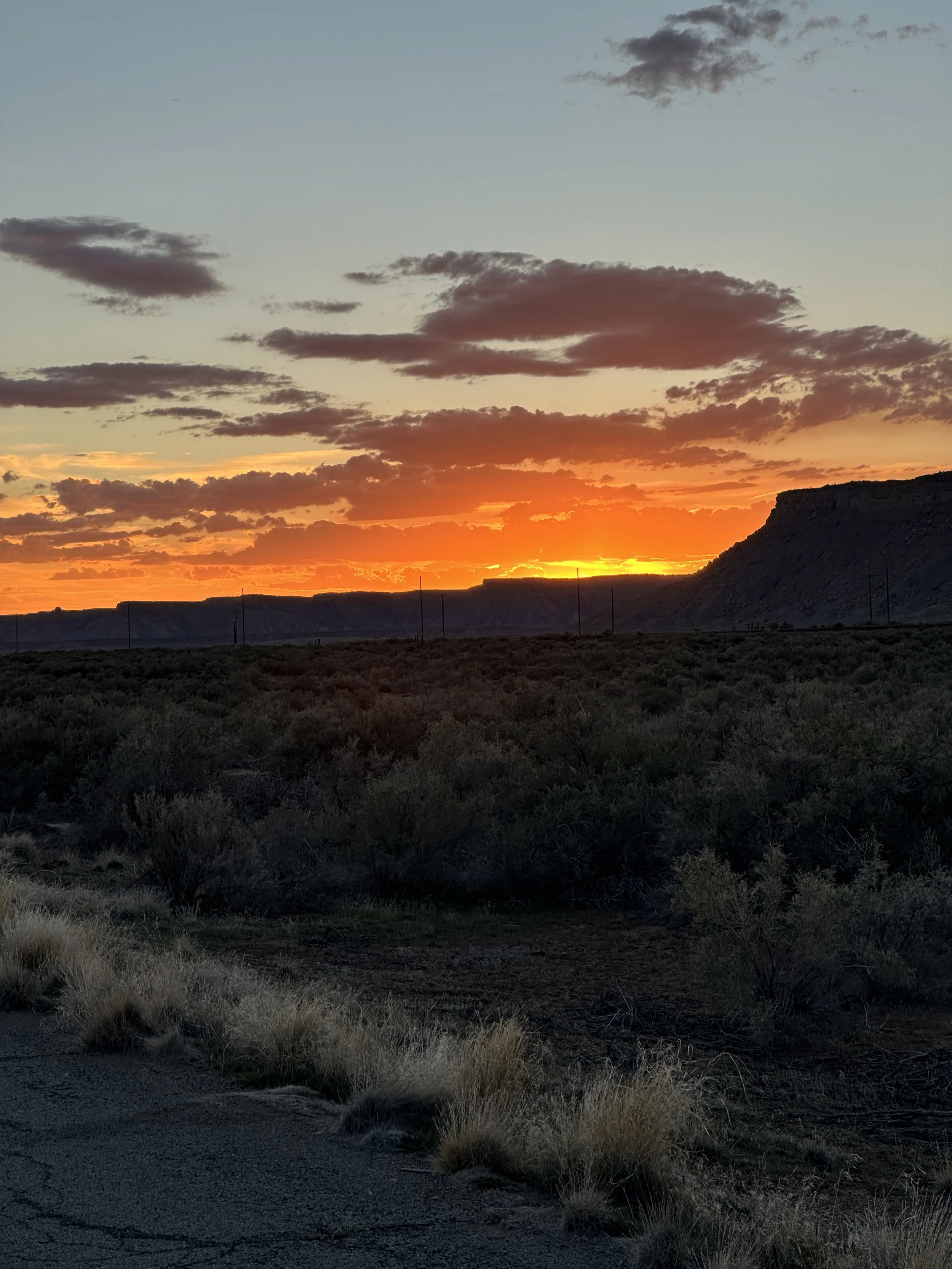
That sense of old Western atmosphere still hangs in the air here; in the rail line, the worn buildings, the desert light, the openness, and the feeling that you are passing through a corner of Utah that never fully left the past behind.
Film, Lore, and the Old West Atmosphere
Desert Moon Today
Today, Desert Moon carries that history forward in its own way.
The trains still pass through. The Book Cliffs still rise in the distance. Sego Canyon is still just up the road. It is still a stop for travelers, but now it is also something more personal: a creative, offbeat, atmospheric place to stay near Moab, Arches, and the red rock desert beyond.
Desert Moon has been restored and reimagined, but not stripped of what makes it interesting. The old wild western spirit is still here; you can feel it when the train passes by.
Accommodations at Desert Moon
Historic Hotel
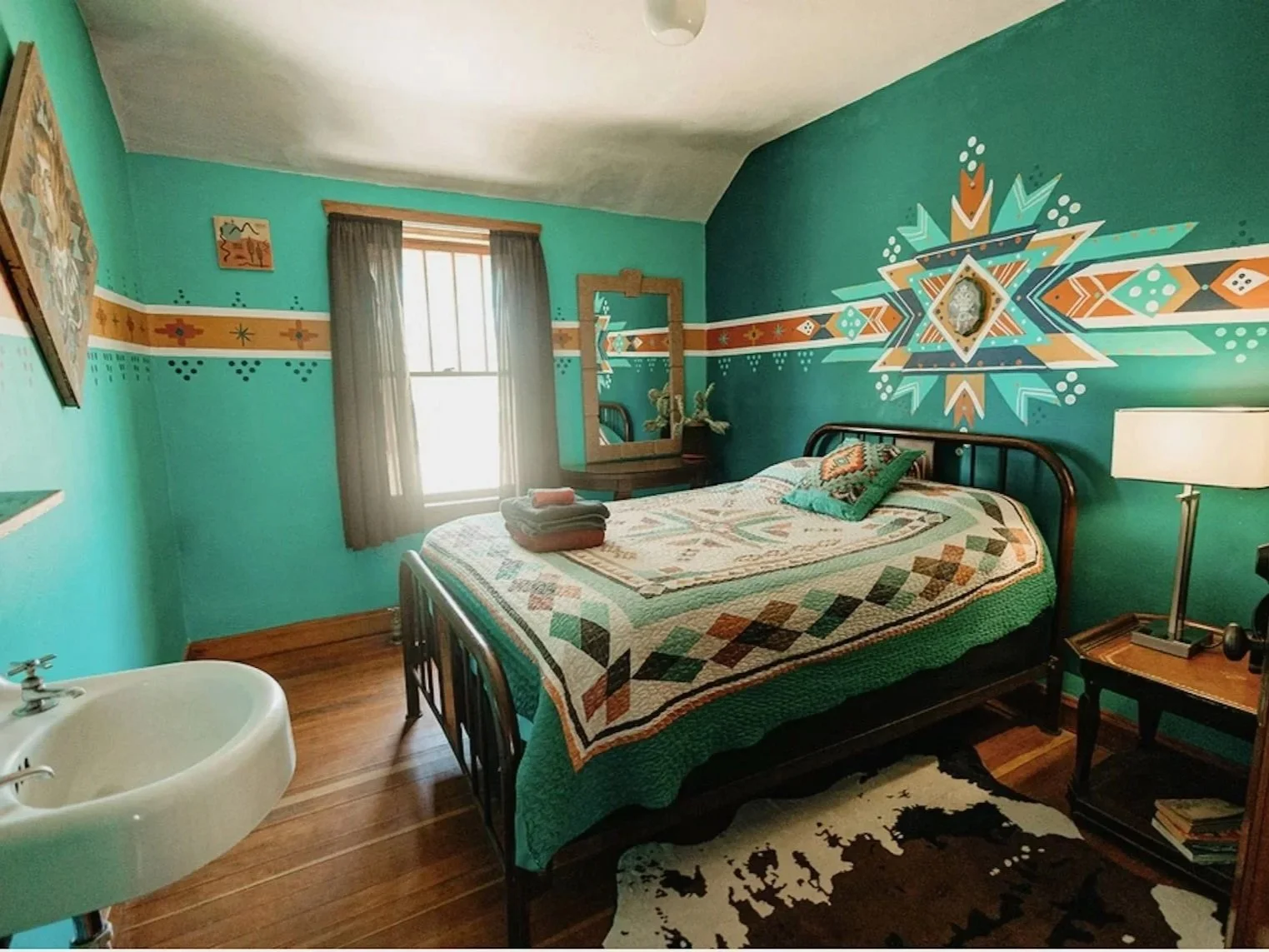
Stay upstairs in the historic Desert Moon Inn, where each room has its own artistic personality. The inn is more like a boutique boarding house, with private rooms, shared bathrooms, and a shared kitchenette.
RV Park
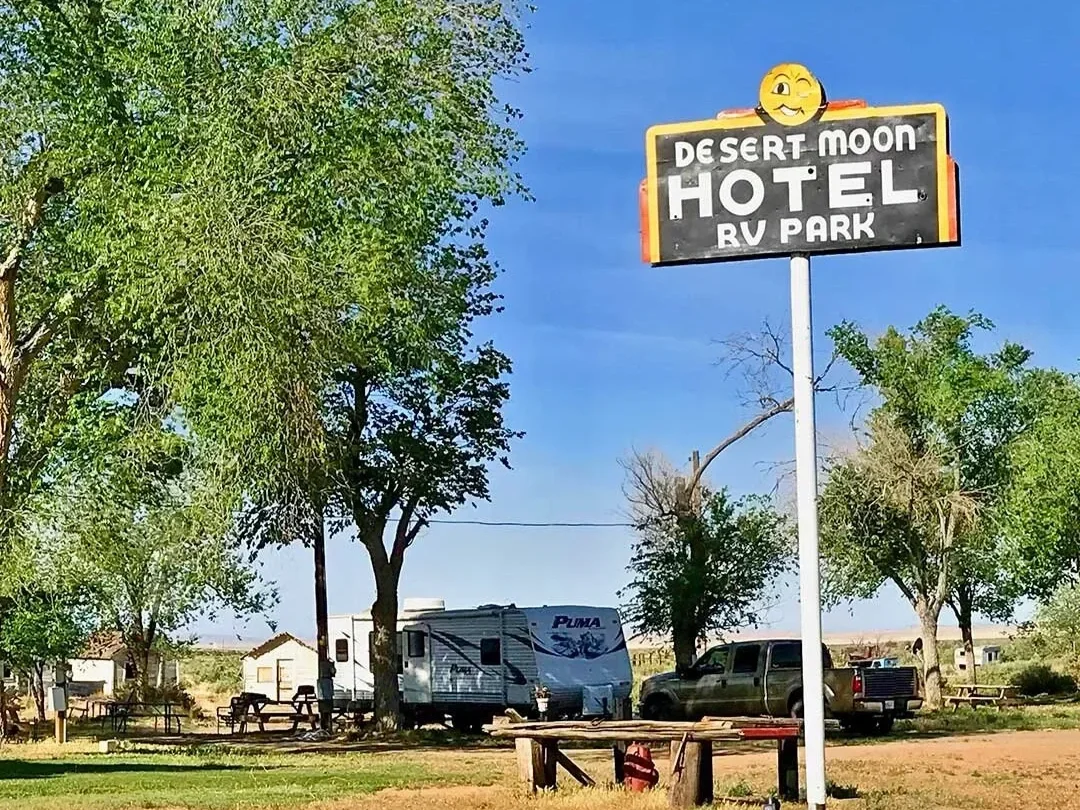
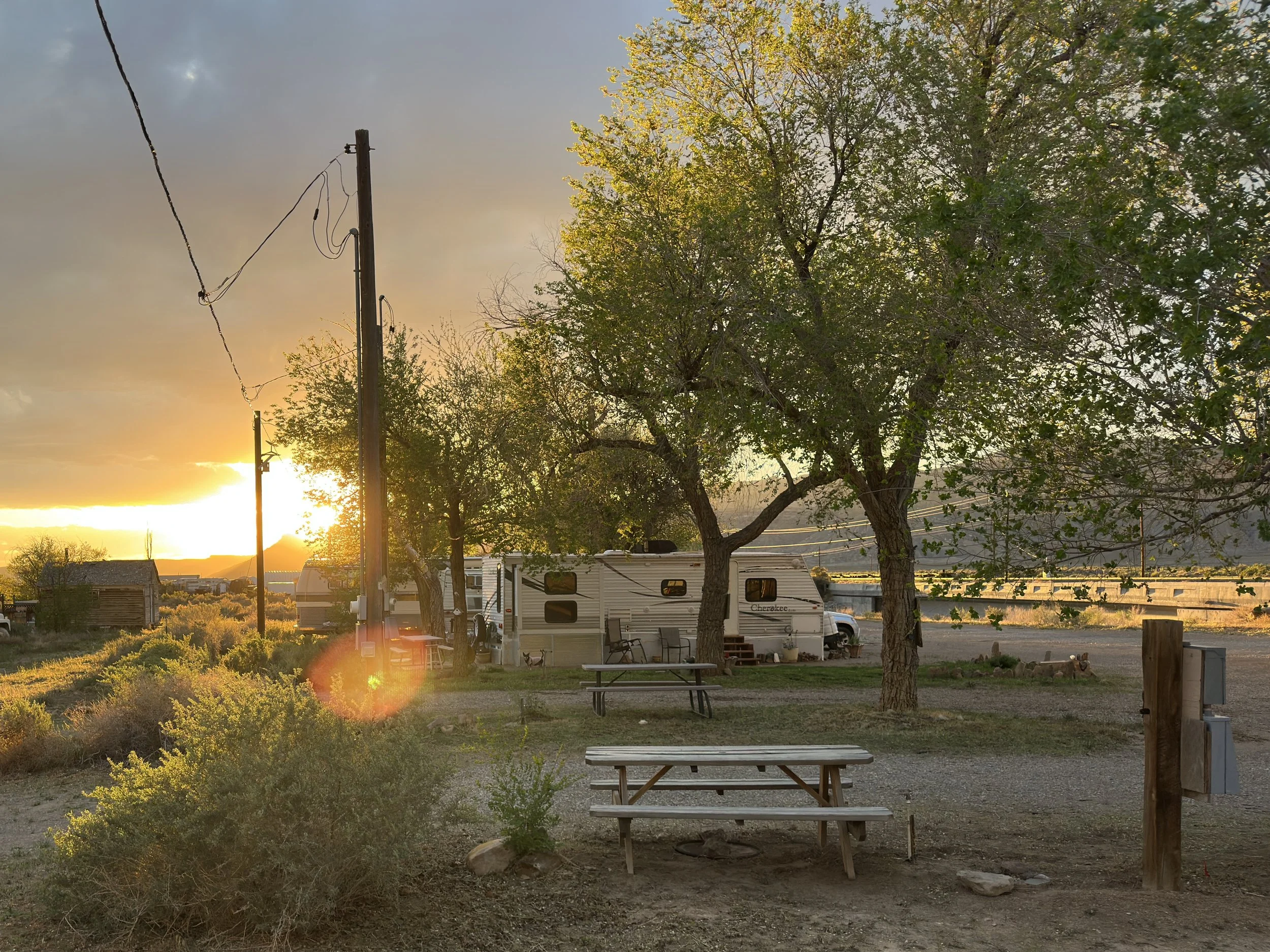
Settle in under the shade trees with full hookup RV sites offering water, electricity, and sewer.
A desert basecamp with easy access to Moab, Arches, Canyonlands, and the surrounding region.
Campgrounds
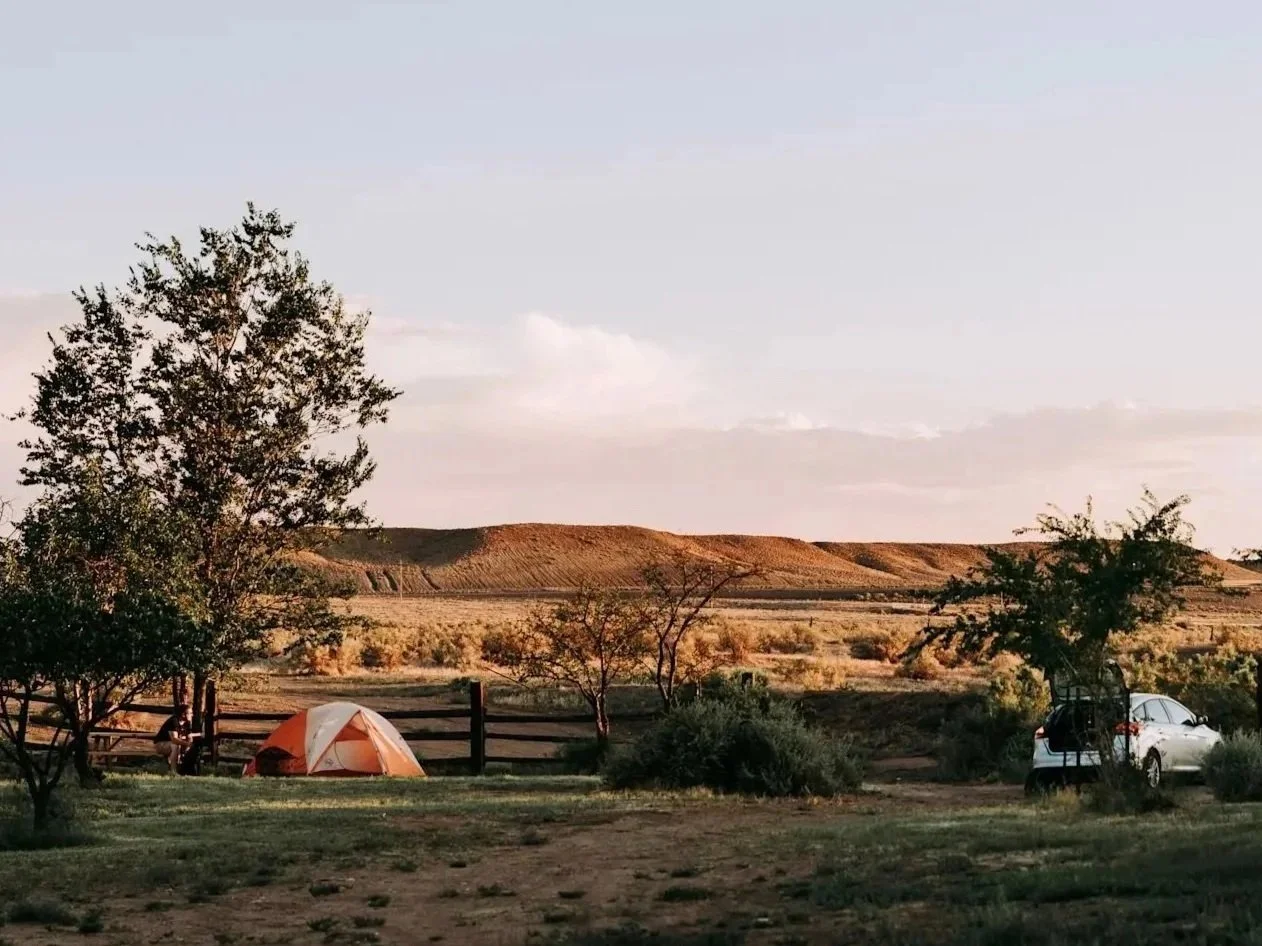
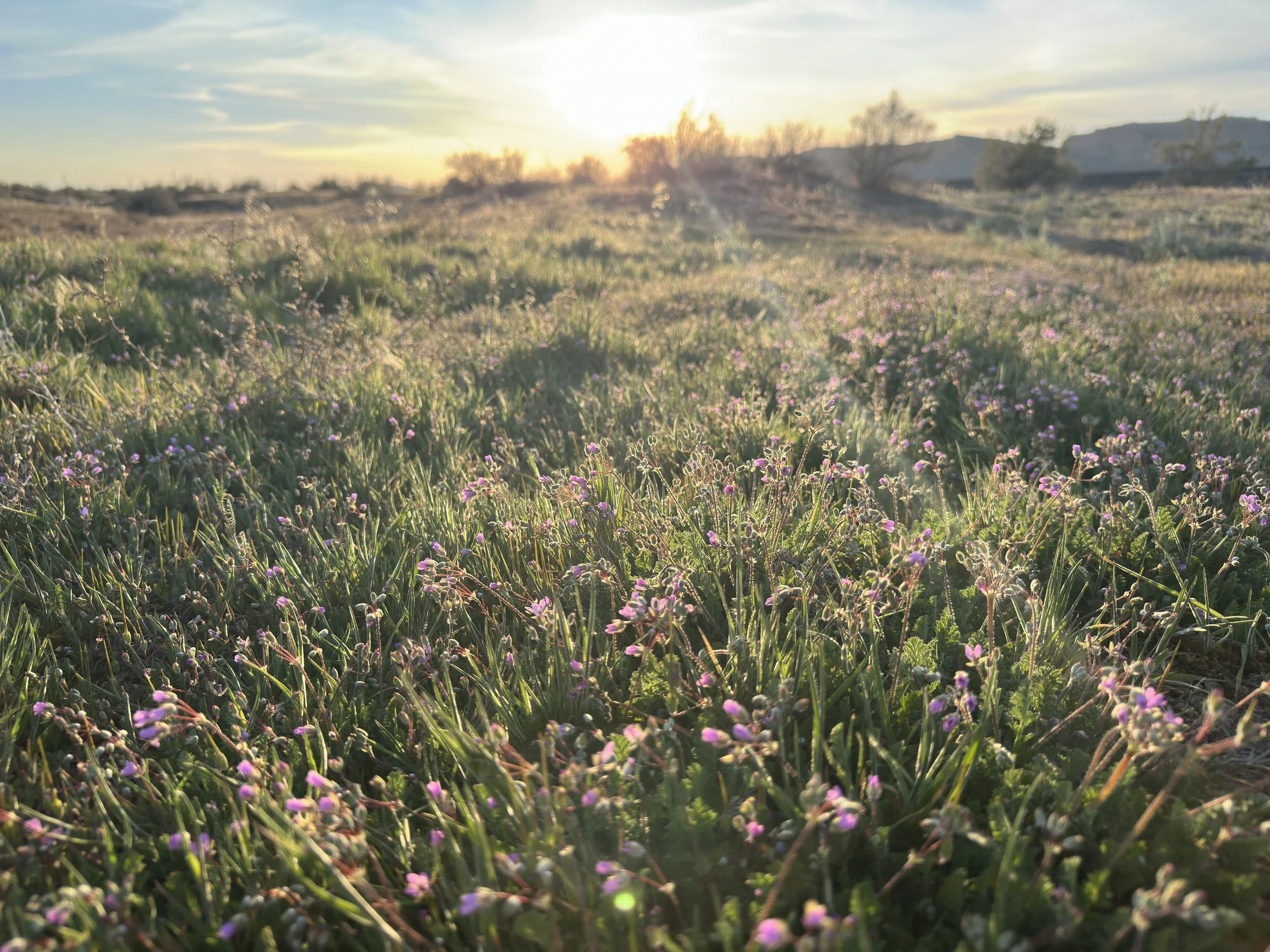
Pitch a tent and enjoy the quiet, open desert atmosphere. Campers have access to restrooms, showers, and water spigots, with plenty of room to take in the landscape.
Find Us in Thompson Springs
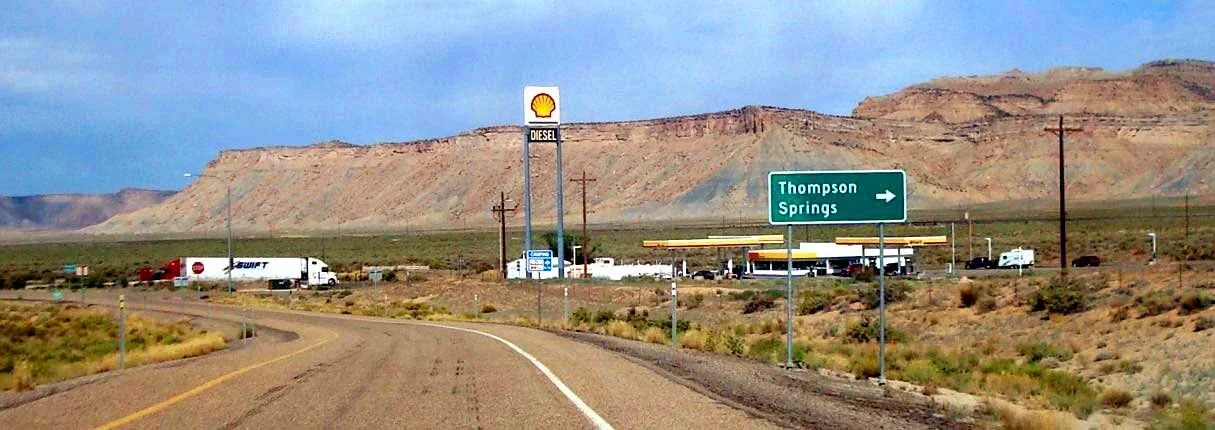
Located just off I-70 at Exit 187, Desert Moon is an easy stop on the way to Moab, Arches, Canyonlands, and the surrounding desert. Close enough for adventure, but far enough out to feel like its own experience.